


I don’t currently do therapy and haven’t had a lot of success with it in the past, but I’m very pro-therapy in general. I’ve picked up a collection of therapy tools from acceptance and commitment therapy (ACT), cognitive behavioural therapy (CBT), dialectical behaviour therapy (DBT), and various others that are handy to pull out of the toolbox as needed. This post is a sample of a few of them. There are also a few other non-therapy-based tools that I find useful.
Table of Contents
Vicious flower


The vicious flower, a CBT-based tool, is a way of demonstrating how mental disorders such as depression, anxiety and OCD tend to be self-reinforcing. Once you’re able to recognize some of the ways your own illness is self-reinforcing, you can start coming up with a plan for change.
University College London has a good sample vicious flower diagram, and Think CBT has a worksheet that you can fill out.
Behaviour chain analysis

This strategy comes from dialectical behaviour therapy (DBT). Sometimes (or even oftentimes), things don’t go all that well.
Behaviour chain analysis is about breaking down the individual steps that led up to the outcome, and then identifying ways that you could respond more skillfully next time you’re in a similar situation.
Part of this is about realistically identifying vulnerabilities. If sleep deprivation is making you more vulnerable, you’ll need to work on addressing that to help you to respond in more effective ways in the future.


Wise mind
Wise mind is another DBT concept, and I think it’s absolutely brilliant.
There’s nothing wrong with reasonable mind or emotion mind, but the best decisions come from wise mind, the area of overlap where we’re engaging both.
So, before making a decision, check in with yourself—do you have wise mind engaged? If you’re fully in emotion mind, try something like a decisional balance grid (see below) to engage reasonable mind. If you’re fully in reasonable mind, try using something like a feelings wheel (see below) to connect with your emotions.

The diving reflex
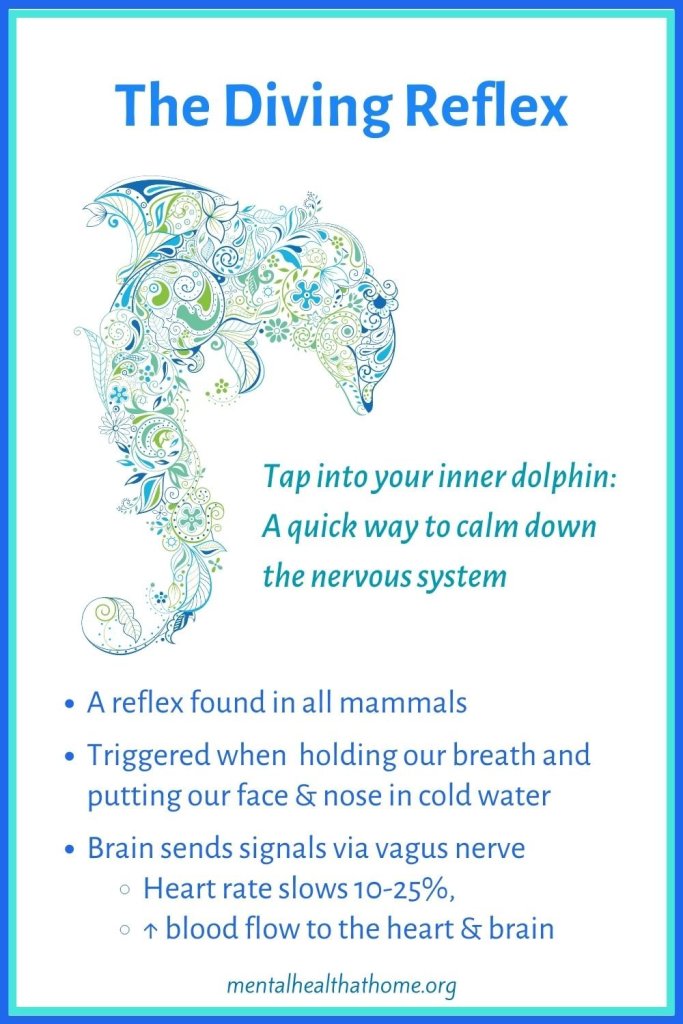
The diving reflex is something all mammals, including humans, have. It kicks in when you put your face in cold water while holding your breath, slowing down your heart rate and conserving oxygen. You can take advantage of it to slow things down physically when you’re anxious.


Self-soothing kit
Self-soothing is a distress tolerance skill in DBT. It involves pleasantly stimulating each of your five senses. Putting together a self-soothe kit ahead of time is probably easier to do than trying to wing it when you’re not feeling well.

Decisional balance grid
The decisional balance grid is motivational interviewing’s take on weighing pros and cons. It’s used when trying to decide whether to adopt a new behaviour or continue on with the status quo.

Change rulers
If you’re contemplating change or in the early stages, the readiness, willingness, and ability change rulers from motivational interviewing can help you see what you need to work on.
The reference point with these rulers should always be 0, not 10. Default mode is sticking with the status quo, which falls around 0-0-0. Anything that’s boosting you above 0 is the good stuff, and that’s what you want to build on.
The reference point with these rulers should always be 0, not 10. Default mode is sticking with the status quo, which falls around 0-0-0. Anything that’s boosting you above 0 is the good stuff, and that’s what you want to build on.

ACT life compass
The acceptance and commitment therapy (ACT) life compass is a way of checking in around whether your actions match up with your values in key areas of life.
If there are discrepancies between how important an area is to you and how much effort you’re putting into that area, consider what you can do to bring you closer to enacting those values.
You can download an ACT life compass worksheet here.

ACT metaphors
ACT is big on metaphors, and one of the common ones is thoughts as leaves on a stream. The idea is that thoughts aren’t who you are. and cognitive defusion allows you to see thoughts as transient visitors floating along in the context of who you are (the stream).
This post on ACT metaphors covers some of the other useful ideas, like the chessboard for viewing self as context, and the tug of war to show the power of acceptance and letting go.

The worry tree
The worry tree is based in cognitive behavioural therapy (CBT). Unlike anxiety, worry is “about” something that might happen in the future. It’s kind of like the future-oriented version of rumination, chewing the problem over and over without getting anywhere.
The worry tree is about putting a stop to the endless chewing. Do something about the problem if you can, or put it aside.
Identifying emotions
Whether we’re working on regulating emotions in DBT, accepting emotions in ACT, or examining the relationship between thoughts, emotions, and behaviours in CBT, figuring out what those emotions are is a useful starting point. That’s not always easy to do when the inner emotion soup is bubbling away. In my bullet journal list, I have an emotion list that comes in handy to pick and choose from when doing my daily mood logs. Emotion wheels are also a prettier option.


Therapy Worksheets
There are lots of free workbooks and worksheets available that incorporate concepts from evidence-based forms of therapy. If medication is your main form of mental illness treatment, this kind of self-help work can make a great supplement.
There’s a list of loads of resources in this post on Free Mental Health Workbooks.
Some assorted other tools
Here are a few tools that may not be based on actual therapies, but I find them useful anyway.


The fuck-it bucket
The fuck-it bucket appears to have originated with humour writer David Sedaris, and there’s a fabulous post on the topic on the Rebelle Society. The fuck-it bucket is multi-purpose. If you don’t have any fucks to waste on something, but it’s niggling away at the back of your mind, chuck it in the fuck-it bucket.
You can also have a 2-part bucket where you throw in things that aren’t worth any fucks and exchange them for things that are a much better use of your fucks, like peanut butter cups.
Or, if there’s a spiteful little bitch lurking inside that should probably stay inside your head rather than unleashing her into the world, give her a fuck-it bucket with a few rubber chickens, dead fish, or toilet paper rolls that she can figuratively fling at people who are sucking way too many fucks out of you. My fuck-it bucket, shown below, contains dead fish for figurative throwing.
The dudgeon-o-meter
First off, what the heck is dudgeon? The phrase “in high dudgeon” refers to a feeling of offense or resentment. While it can be tempting to fire off angry emails/texts/calls during this time, you’re probably not communicating very effectively in that state.
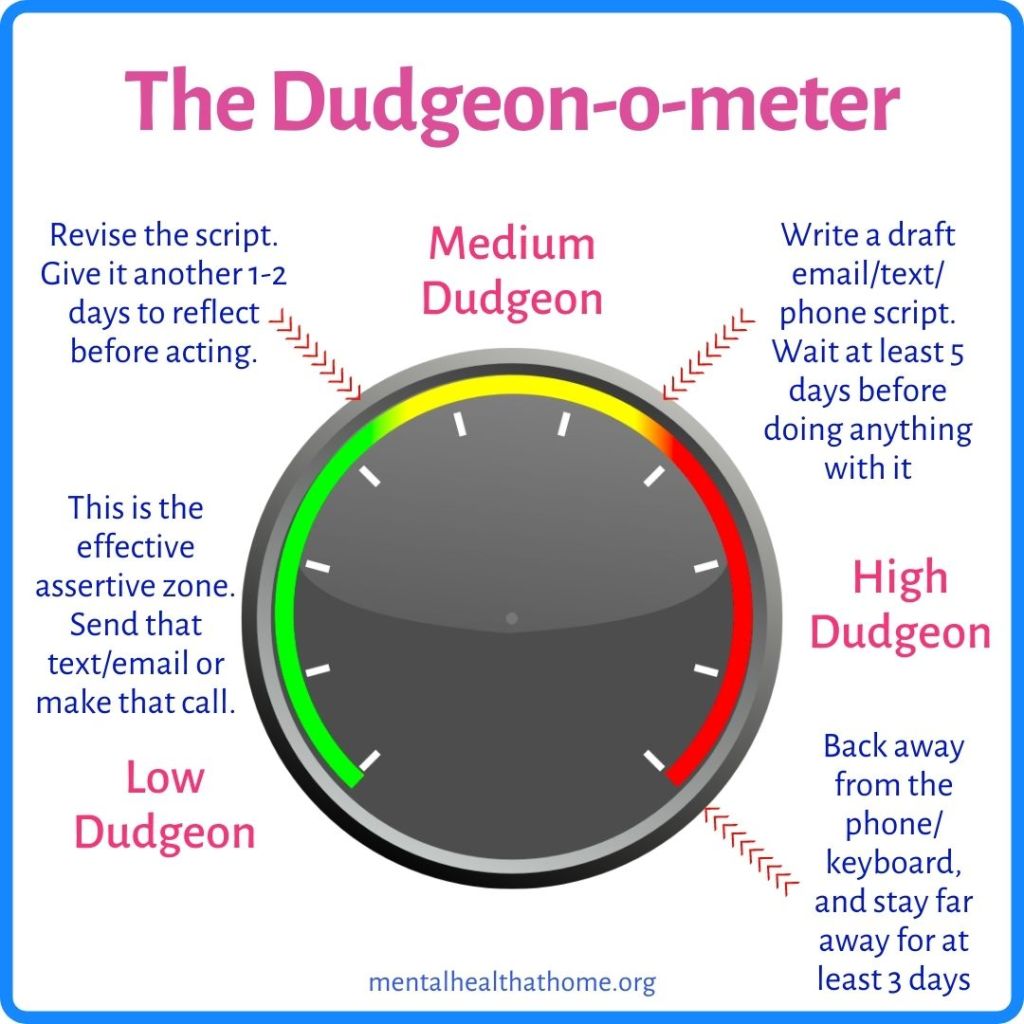
I came up with the dudgeon-o-meter after realizing that I needed to do a better job of reining myself in while in a state of high dudgeon.
You can also check out my reacting to hurt decision tool.

Anchoring
This is something I thought of when talking to a friend about faith and values in relation to violent thoughts. When a ship is anchored, the anchor doesn’t stop the ship from moving, but it does keep it from getting carried away.
Our faith, values, and other things that are important to us can act as psychological anchors, but that doesn’t mean they stop difficult thoughts and emotions; instead, they can help keep us from getting carried away by them.
Do you have any favourite tools you like to keep handy in your mental health toolbox?
Related posts
- Bullet Journalling Part I: The Basics
- Self-Care: More Than Just Bath Bombs
- The Mental Illness Cutlery Drawer: Spoons, Forks & More
- The Rainbow Model of Mental Illness Symptoms & Functioning
- The Stress Bucket Model
- What’s in My Therapy Journal
The Resources page has a free downloadable mini-ebook called the Therapy Basics Toolbox, which covers key concepts from acceptance and commitment therapy (ACT), cognitive behavioural therapy (CBT), and dialectical behaviour therapy (DBT).


The Coping Toolkit page has a broad collection of resources to support mental health and well-being.
![So you've just been diagnosed with... [ mental illness]](https://i0.wp.com/mentalhealthathome.org/wp-content/uploads/Just-been-diagnosed-600.png?resize=600%2C300&ssl=1)
The So You’ve Just Been Diagnosed with… [a Mental Disorder] page brings together information, advice, and resources from people who’ve been there. New input is always welcome!